
Five Common Triggers for Aggressive Driving (and How RADEP Helps You Recognize Them)
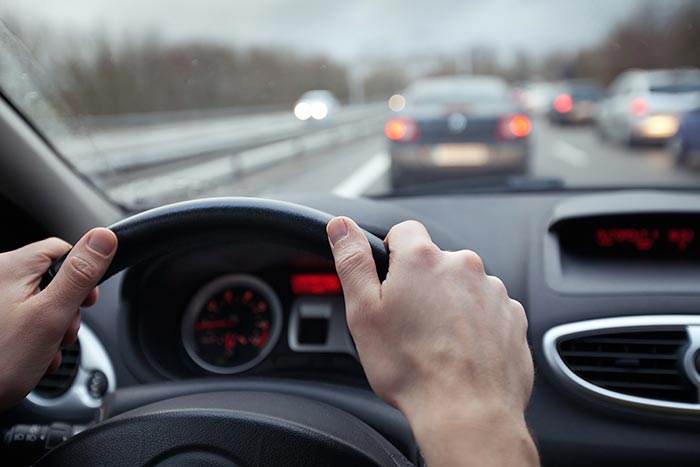
Aggressive driving rarely happens for no reason. Drivers who behave aggressively behind the wheel are responding to specific triggers, even when they cannot articulate what those triggers are in the moment. RADEP’s behavioral curriculum is built around helping students identify the triggers that produce their own aggressive responses. Understanding the five most common triggers, and how to recognize them in yourself, is one of the most practical skills the program teaches.
Trigger One: Time Pressure
The most common trigger for aggressive driving is time pressure. Drivers running late for work, school, an appointment, or any obligation experience measurable physiological changes: elevated heart rate, increased cortisol, narrowed visual focus, reduced patience for delays. These changes are the body’s stress response, and they directly affect driving decisions.
Time-pressured drivers tailgate more aggressively, change lanes more frequently, accelerate harder, and brake harder. They make passing decisions that drivers without time pressure would reject. They become impatient with traffic signals, school buses, construction zones, and the routine slowdowns that any drive includes.
RADEP teaches students to recognize time pressure as a state rather than an inevitable response to a late departure. Students learn to acknowledge the pressure, accept that aggressive driving rarely actually saves meaningful time (and often costs time when it produces a traffic stop or crash), and engage in specific calming techniques during the drive.
Trigger Two: Perceived Disrespect From Other Drivers
Many aggressive driving incidents begin with a driver perceiving disrespect from another driver. The trigger might be a slow merge, a delayed response to a green light, a perceived improper lane change, a horn honk, or any of dozens of routine traffic interactions that the aggressive driver interprets as personal disrespect.
Once the perception of disrespect takes hold, the aggressive driver enters an escalation pattern. They want to communicate displeasure, sometimes through gestures or horn use, sometimes through behaviors meant to retaliate or intimidate. The other driver, who may not have even noticed the original incident, suddenly finds themselves in a confrontation they did not seek.
RADEP’s curriculum addresses this trigger by exploring how driver communication actually works. Most traffic interactions are not personal. Drivers cannot see each other’s faces clearly, cannot hear words, and rarely have context for why another driver did something. Interpreting routine traffic events as personal disrespect is a cognitive bias the program helps students recognize and counteract.
Trigger Three: Anonymity Behind the Wheel
Drivers behave differently than they would face-to-face because the vehicle creates a layer of anonymity. The same person who would never push past a stranger in a checkout line will aggressively cut off a stranger on the highway. The same person who would never shout at someone in a grocery store will lay on the horn and gesture at a driver who delayed them by three seconds.
This anonymity effect is well documented in social psychology research. People behave more aggressively when they feel unidentifiable, when they expect no consequences for their behavior, and when they cannot see the human impact of their actions. The vehicle provides all three conditions simultaneously.
RADEP helps students recognize anonymity as a trigger that lowers their behavioral standards rather than removing the standards entirely. The program asks students to consider whether they would treat the other driver the same way if they were standing face-to-face. The honest answer for most students is no, which makes the underlying behavior pattern visible in a way that supports change.
Trigger Four: Pre-Existing Stress From Non-Driving Sources
Drivers often enter the vehicle already stressed from circumstances unrelated to driving. Work conflicts, family arguments, financial pressure, sleep deprivation, illness, and dozens of other life factors produce stress that follows the driver into the car. The accumulated stress affects driving even though none of it originated in the driving context.
Stressed drivers have shorter fuses, react more strongly to minor irritations, and are more prone to aggressive responses than they would be in a calm state. The same routine interaction that would produce no reaction on a good day produces a major aggressive response on a stressful day.
RADEP teaches students to perform a brief self-check before driving. Are you stressed? Tired? Hungry? Angry about something that happened recently? Drivers who recognize their state before they drive can adjust their approach (driving more slowly, choosing less crowded routes, allowing extra time) rather than letting the pre-existing stress drive their decisions on the road.
Trigger Five: Habitual Patterns From Previous Driving
Some drivers develop aggressive patterns through years of repetition. They have always been impatient, always followed too closely, always changed lanes aggressively, and the patterns have become automatic responses rather than deliberate choices. The driver may not even recognize the patterns as aggressive because they feel normal.
Habitual patterns are the most difficult triggers to address because the driver does not perceive a trigger at all. The behavior occurs without conscious decision. By the time the driver notices, the lane change is already complete, the gap has already closed, the horn has already sounded.
RADEP addresses habitual patterns through deliberate reflection on past driving and through specific awareness exercises designed to bring automatic behaviors into conscious view. Students keep mental notes during the program of behaviors they recognize in themselves, even when those behaviors were not the cause of the citation that brought them to RADEP. The point is not punishment for past patterns but recognition that supports new patterns going forward.
How RADEP Builds Recognition Skills
RADEP’s structured curriculum builds trigger recognition through repetition rather than through a single revelation. Across the program’s 12 hours, students encounter the triggers in different contexts, hear from other students about how the triggers operate in their lives, and practice identifying which triggers most affect their own driving.
The program does not require students to publicly disclose specific incidents from their lives. The recognition work is internal. Students develop their own understanding of which triggers affect them and how, and they leave the program with a personal map of vulnerabilities they can actively manage.
Practicing Trigger Awareness Outside the Classroom
The classroom work is foundation, not finish. Students who internalize trigger recognition continue practicing the skill in their daily driving for months after the program ends. They notice the time-pressure trigger activating when they are running late and choose to leave earlier next time. They catch the perceived-disrespect trigger and pause before responding. They acknowledge the anonymity trigger and ask themselves how they would behave face-to-face.
This ongoing practice is what produces lasting change. RADEP at 1 Stop Driving School is designed to start the trigger-awareness habit rather than complete it. Students who maintain the awareness after the program leave with substantially lower probability of returning to the patterns that brought them to court in the first place. The program is most effective for students who treat it as the start of a new practice rather than the end of a court requirement.
