
How Radar and LIDAR Evidence Work in Virginia Reckless Driving Cases
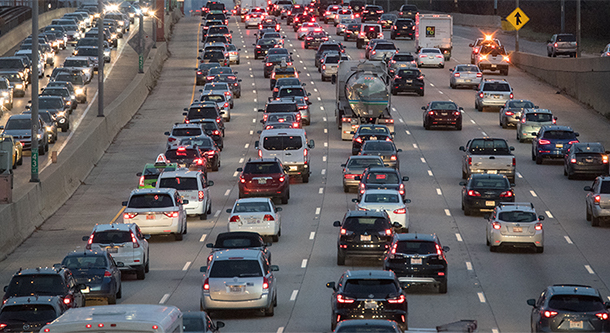
The vast majority of Virginia reckless driving charges based on speed rely on radar or LIDAR evidence to establish the vehicle’s speed. Understanding how these technologies work, how officers use them, and where potential challenges exist helps defendants evaluate the strength of the evidence against them and prepare appropriate case strategies.
How Radar Works
Radar (Radio Detection and Ranging) measures vehicle speed by emitting a radio wave, detecting the wave’s reflection off the moving vehicle, and calculating speed based on the frequency shift between the emitted and reflected waves. This frequency shift is known as the Doppler effect and is the same principle that changes the pitch of an ambulance siren as it approaches and passes.
Handheld radar units and vehicle-mounted radar units both operate on the same underlying principle. Vehicle-mounted units used from moving patrol vehicles include additional calculations to compensate for the patrol vehicle’s own speed, producing an accurate reading of the target vehicle’s speed regardless of the officer’s motion.
How LIDAR Works
LIDAR (Light Detection and Ranging) uses laser pulses rather than radio waves. The unit emits a pulse of laser light, the pulse reflects off the target vehicle, and the unit calculates distance based on the time delay between emission and reception. By taking multiple readings in rapid succession, LIDAR calculates speed based on the changing distance to the target.
LIDAR is more precise than radar for identifying which specific vehicle in a group of vehicles the reading applies to. The narrow beam of a LIDAR laser can target a single vehicle in traffic, while radar’s wider beam can produce ambiguity when multiple vehicles are close together. This precision makes LIDAR particularly useful in heavy traffic where target identification would otherwise be challenging.
Officer Certification Requirements
Virginia requires officers using radar or LIDAR for speed enforcement to complete specific training and maintain current certifications. The training covers operation of the specific unit, procedures for confirming target identification, tests to verify equipment accuracy at the beginning and end of each shift, and documentation requirements.
Officer certification is defensible evidence in court. Prosecutors typically introduce evidence of the officer’s training and certification to establish that the officer was qualified to operate the equipment. Defendants and their attorneys can request evidence of the specific officer’s training records as part of case discovery.
Equipment Calibration Requirements
Radar and LIDAR units must be calibrated within specific intervals to produce reliable evidence. Virginia requires calibration certificates showing that each specific unit passed accuracy testing within the required timeframe, typically six months before the citation date.
Missing or expired calibration certificates can produce successful challenges to the speed evidence. Prosecutors must produce calibration documentation as part of case presentation, and defendants can request the documentation through discovery. Cases where calibration documentation is missing, incomplete, or shows testing outside the required interval sometimes result in charge reductions or dismissals.
Environmental Factors That Affect Accuracy
Radar and LIDAR accuracy can be affected by environmental conditions. Heavy rain, thick fog, dense snow, and certain temperature conditions can affect signal transmission and reception. Reflective surfaces, radio interference from other sources, and reflections off multiple vehicles can all produce readings that require additional interpretation by the operating officer.
Successful challenges based on environmental factors require specific evidence of the conditions at the time of the citation. Weather records, video from the officer’s dashcam, and testimony about specific conditions can support the argument that the reading may have been affected by factors beyond the vehicle’s actual speed.
Discovery and Evidence Challenges
Defendants preparing to challenge radar or LIDAR evidence should request specific discovery materials early in the case. Key documents include calibration certificates for the specific unit used, the officer’s training and certification records, any dashcam or bodycam footage, the officer’s written report, and any additional evidence the prosecution plans to introduce.
Reviewing discovery materials carefully often identifies specific vulnerabilities that support case strategy. Missing documentation, inconsistencies between the officer’s report and other evidence, and procedural failures during the stop all can support charge reduction arguments. Attorney review of discovery is typically far more effective than defendant review because attorneys know what to look for and can identify subtle issues defendants would miss.
When Aircraft or Pacing Evidence Is Used
Some Virginia speed cases rely on evidence other than radar or LIDAR. Aircraft-based speed enforcement uses two ground markings a known distance apart, with the aircraft timing the vehicle’s travel between markings and radioing the time to a ground unit that calculates speed. Pacing evidence involves an officer following the vehicle at matched speed for a specific distance, using the patrol vehicle’s speedometer to establish the target’s speed.
Both aircraft and pacing evidence have their own accuracy requirements and potential challenges. Aircraft cases require documentation of the ground markings, the aircraft’s timing procedures, and the coordination between aircraft and ground units. Pacing cases require documentation that the patrol vehicle’s speedometer was accurate and that the pacing was maintained for a sufficient distance to produce a reliable reading.
How Speed Evidence Relates to RADEP Enrollment Strategy
Defendants facing speed-based reckless driving charges should evaluate the evidence realistically. Strong evidence that clearly documents speed above the reckless threshold typically produces limited defense options and steers the case toward mitigation strategies. Weak or vulnerable evidence may support more aggressive defense strategies.
Voluntary RADEP enrollment supports both strategic paths. In mitigation-focused cases, RADEP completion provides tangible evidence of the defendant’s initiative that supports favorable plea outcomes. In defense-focused cases, RADEP completion provides mitigation backup in case the defense strategy does not produce the desired outcome.
The Cost of Ignoring Speed Evidence Realistically
Defendants who convince themselves that speed evidence must be challengeable simply because they want the charge to go away sometimes make case decisions that produce worse outcomes than realistic assessment would produce. Not every case has viable evidence challenges, and pursuing weak challenges can consume time and money without producing the desired result.
Honest evaluation of the specific evidence, ideally with attorney assistance, produces better decisions than emotional attachment to a particular outcome. Cases with weak evidence support one strategy; cases with strong evidence support another. Matching strategy to actual evidence produces better outcomes than pursuing preferred strategies without regard to what the evidence supports.
1 Stop Driving School’s RADEP course supports defendants across the spectrum of speed-based reckless driving cases. Whether the specific case involves clear-cut evidence or genuine defense possibilities, voluntary RADEP completion adds value to the case strategy and produces educational benefit independent of the case outcome.
