
Reckless Driving Involving Accidents and Injuries in Virginia
This article is informational only. Defendants facing reckless driving charges involving accidents or injuries should consult a licensed Virginia attorney immediately.
Reckless driving charges arising from cases involving accidents or injuries carry substantially different consequences from standard reckless driving cases. The elevated stakes affect prosecutorial approach, judicial sentencing, insurance exposure, and civil liability separately. Defendants in these categories face compounded consequences that require careful case management from the earliest stages.
When Accidents Elevate the Case
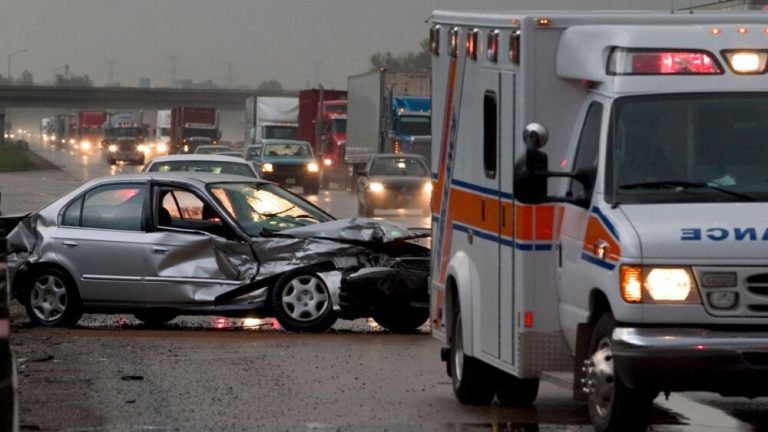
Standard reckless driving cases involve no crash. The driver was cited for behavior that could have produced a crash but did not. Reckless driving cases where a crash actually occurred sit differently in the legal framework and the emotional context of the courtroom.
Prosecutors typically view crashed cases as more serious than uncrashed cases for the same underlying behavior. A driver going 30 mph over the limit who continues safely to their destination receives different treatment than a driver going 30 over who crashed. The realized harm changes the case’s profile even when the underlying conduct is technically identical.
Judges similarly view crashed cases with less leniency than uncrashed cases. Sentences tend toward the higher end of statutory ranges, plea reductions to improper driving are less commonly offered, and license suspensions become more likely. First-time offenders in crashed cases sometimes receive outcomes similar to repeat offenders in uncrashed cases.
When Injuries Elevate the Case Further
Injuries add another layer of severity beyond the crash itself. Cases where the defendant’s reckless driving caused injuries to other parties, whether occupants of the defendant’s vehicle, occupants of other vehicles, or pedestrians and cyclists, produce the most serious outcomes within the reckless driving statute.
Injury cases also carry the highest risk of civil liability separately from the criminal case. Injured parties can sue the defendant for damages including medical expenses, lost wages, pain and suffering, and other compensatory categories. Civil damages in serious injury cases can reach six or seven figures depending on the specifics.
The Involuntary Manslaughter Possibility
Cases involving fatalities can escalate beyond reckless driving to more serious charges. Virginia’s involuntary manslaughter statute applies to deaths resulting from criminal negligence, which can include reckless driving that causes a fatal crash. Involuntary manslaughter is a Class 5 felony carrying substantially more serious penalties than reckless driving.
Not every fatal crash produces an involuntary manslaughter charge. Prosecutors evaluate the specific circumstances, the underlying conduct, and the evidence supporting criminal negligence. Some fatal reckless driving cases proceed under the reckless driving statute; others escalate to involuntary manslaughter. Defendants facing any fatal crash case should consult an attorney immediately regardless of the initial charge classification.
Civil Liability Separate From Criminal
Criminal cases and civil cases operate on separate tracks. A defendant found not guilty of reckless driving criminally can still be found liable for damages in a civil suit brought by the injured party. A defendant found guilty of reckless driving can face civil liability that dwarfs the criminal penalties. The two proceedings apply different standards of proof and pursue different purposes.
Civil suits typically follow criminal cases by months or years, giving injured parties time to complete medical treatment, assess long-term damages, and evaluate insurance recovery options. Defendants involved in serious injury or fatal crashes should assume civil litigation is a realistic possibility even when no immediate lawsuit has been filed.
Insurance coverage responds to civil claims through the defendant’s auto policy up to the policy limits. Damages exceeding policy limits become the defendant’s personal responsibility. Umbrella insurance policies, business insurance policies, and other coverage sources may extend the available insurance depending on the specifics.
Prosecutorial Approach to These Cases
Prosecutors typically pursue accident and injury cases more actively than standard reckless driving cases. Trial preparation is more thorough. Evidence collection is more extensive. Witness interviews cover more ground. The prosecution treats these cases as significant matters warranting substantial resources rather than routine traffic cases warranting efficient disposition.
Plea negotiations in these cases operate on different assumptions than standard cases. Prosecutors typically resist reductions to improper driving in crashed or injury cases. When reductions are offered, they may involve conditions more demanding than would apply to standard cases. Defendants should adjust expectations accordingly.
How Judges Sentence These Cases
Virginia judges typically impose sentences at the higher end of the statutory range for accident and injury cases. Fines closer to the $2,500 maximum, jail time even for first offenders, and license suspensions become more common. Judges balance the individual circumstances of the defendant against the realized harm to victims, and realized harm typically weighs heavily.
Judges also consider evidence of the defendant’s response to the incident. Defendants who have expressed remorse, offered assistance to injured parties, cooperated with investigators, and completed voluntary corrective action receive more favorable consideration than defendants who have shown no such initiative.
How RADEP Applies in These Cases
RADEP completion supports mitigation even in the most serious reckless driving cases. Judges recognize that voluntary completion of a substantial behavioral intervention demonstrates the defendant’s commitment to preventing similar incidents. The completion cannot undo the realized harm but can support arguments for sentencing that emphasizes rehabilitation alongside punishment.
In cases involving multiple deferred outcomes or complex plea negotiations, RADEP completion may be one component of a broader agreement. Community service, extended probation, mandatory treatment, and other conditions may all form part of a comprehensive resolution. Completing RADEP promptly supports all these components by removing one condition from the list of remaining obligations.
When Immediate Attorney Involvement Is Essential
Defendants involved in accidents or injuries should retain an attorney immediately. The stakes are too high, the legal complexity is too great, and the coordination between criminal and civil dimensions is too intricate for self-representation to work well. Attorneys familiar with serious traffic cases can coordinate case strategy across criminal, civil, and insurance dimensions in ways that produce substantially better total outcomes.
Delaying attorney retention costs defendants access to strategic options that early involvement would preserve. Statements made to investigators before attorney consultation can affect both criminal and civil outcomes. Cooperation decisions, insurance company communications, and preservation of evidence all benefit from early attorney guidance.
Emotional and Practical Support
Defendants involved in serious accidents often experience significant emotional consequences beyond the legal case. Being responsible for injuries or fatalities is genuinely traumatic, and the psychological toll can affect decision-making, work performance, and general functioning during the case period. Recognizing this reality and seeking appropriate support (mental health services, family support, community resources) can improve both the individual’s wellbeing and the case outcomes.
1 Stop Driving School’s RADEP course serves defendants across the full spectrum of reckless driving cases including serious accident cases. The curriculum’s behavioral content addresses the emotional as well as the practical dimensions of driving safely, and completion supports both immediate case outcomes and long-term recovery. Defendants in these cases should coordinate their program timing with their attorney to ensure the completion date supports the case strategy that a serious matter warrants.
